
A Rs 525-crore contingency provision during the July-September period led to a 19 per cent fall in IndusInd Bank's share price on Friday (October 25). Contingency provisions are generally made when a lender expects more bad loans in the coming quarters. Shares of the bank on Tuesday (October 29) declined 1.53 per cent to settle at Rs 1,038.2 apiece on the BSE.

Liquidity in the banking system has slipped into a deficit for the first time in three weeks, prompting banks to borrow the largest quantum of funds from the Reserve Bank of India (RBI) in around a month and a half. The key catalyst for the sudden tightening in liquidity was due to outflows on account of advance tax payments, which occur towards the end of a quarter. Analysts also cited other factors such as a currency leakage and possible interventions by the RBI in the foreign exchange market, which contributed to the tighter liquidity conditions.

Retail investors have been the hardest hit in the recent market downturn, with stocks where they hold over 20% falling 45% from their 52-week highs.

Share prices of Nestle India, Asian Paints, Bandhan Bank, Tata Technologies, AU Small Finance Bank and Avenue Supermarts, all a part of the BSE 500 index, have hit their respective 52-week lows on the BSE in Thursday's intra-day trade after a sharp correction in the equity markets.

'It was inspired by the Hamas attack and was like their attack -- well planned and well executed.'

A summary of Saturday's action in Ligue 1, LaLiga and Bundesliga.
From 30 Sensex firms, Adani Ports, NTPC, Power Grid, State Bank of India, Nestle, Mahindra & Mahindra, Reliance Industries and Tata Consultancy Services were the biggest laggards. Axis Bank, Infosys, JSW Steel, Tata Motors, HDFC Bank and Kotak Mahindra Bank were among the gainers from the blue-chip pack.
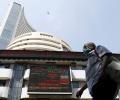
ITC was the top loser in the Sensex pack, shedding nearly 3 per cent, followed by Tech Mahindra, Axis Bank, Asian Paints, TCS, HCL Tech, HDFC and Kotak Bank.

Christopher Wood, global head of equity strategy at Jefferies has rejigged his equity portfolios. In his Asia ex-Japan long-only portfolio, he has added Axis Bank (5 per cent weightage) and increased holding in Larsen & Toubro (L&T) by one percentage point. This, Wood said, will be paid for by removing the investment in ICICI Lombard General Insurance and reducing the investments in HDFC Bank and Reliance Industries (RIL) by one percentage point each.

Kotak Bank was the top gainer in the Sensex pack, rising over 5 per cent, followed by Bharti Airtel, HDFC Bank, Maruti, Axis Bank and Nestle India.

India's economic growth rate is estimated to slip to a four-year low of 6.4 per cent in 2024-25, mainly on account of poor showing by the manufacturing and services sector, according to government data released on Tuesday. The gross domestic product (GDP) rate of 6.4 per cent will be the lowest since the Covid year (2020-21) when the country witnessed a negative growth of 5.8 per cent.

SBI was the top loser in the Sensex pack, shedding over 1 per cent, followed by Reliance Industries, Tech Mahindra, M&M, L&T, Bharti Airtel, IndusInd Bank and HDFC. NSE Nifty slipped 31.60 points to 15,824.45.

Among the 30 Sensex firms, Mahindra & Mahindra, IndusInd Bank, Bharti Airtel, Axis Bank, Tata Motors and ICICI Bank were the biggest laggards. In contrast, Tata Steel, Tata Consultancy Services, NTPC, JSW Steel, Asian Paints and Reliance Industries were gainers.

From the Sensex stocks, Maruti Suzuki India, Tata Motors, JSW Steel, Larsen & Toubro, Tata Steel, Mahindra and Mahindra, Tata Consultancy Services, Tech Mahindra, HCL Technologies and Infosys were the laggards. HDFC Bank, Sun Pharmaceuticals, Kotak Mahindra Bank, Nestle India and Asian Paints were among the gainers.

If the index is unable to sustain above 24,500 levels, technically it can then slip to its 200-DMA placed at 23,365 levels.

Nadaaniyan's lack of charm, chemistry and cheek fails to create any ripples sighs Sukanya Verma.

While the wholesale price index stood at 0.48 per cent in the previous week, the rate of price rise was 9.32 per cent during the corresponding week a year ago. During the week, the prices of eggs went up by 11 per cent, mutton 3 per cent, and fruit and vegetables and spices 2 per cent each.

The global turmoil in the banking sector has made analysts cautious, who advise that investors stay away from stocks of this sector till the overall sentiment improves. The recent trouble for the banking sector started with the collapse of US-based Silicon Valley Bank (SVB), Silvergate Capital and Signature Bank. On its part, Moody's Investors Service has also cut its outlook for the US banking system to 'negative' from 'stable', citing the run on deposits at these three banks that led to the collapse of these banking majors in less than a week.

The Reserve Bank of India's (RBI's) latest order on unsecured loans is set to hit the banking sector's growth in the near-term, cautioned analysts, as they see banks slowing down on aggressive retail lending. Besides, cost of funds for non-banking finance companies (NBFC) is expected to inch up as banks will pass on higher capital charge to NBFCs. "We believe the fallout of the RBI action will be mainly on growth, given the rising dependence on unsecured retail loans and lending to NBFCs for growth.

Ask rediffGURU and PF expert Milind Vadjikar your insurance, stocks, mutual fund and personal finance-related questions.

After a strong run in the midcap and smallcap indices, which surged 46 per cent and 43 per cent, respectively, on the National Stock Exchange (NSE) during Samvat 2080, analysts suggest that the rally in these segments may pause to catch its breath in Samvat 2081.

The sharp pullback in mid and smallcap stocks signals a cooling-off period in segments that previously attracted considerable investor interest.

'If weak indicators persist, there is a risk that India could slip into a prolonged slowdown similar to the one experienced between 2014 and 2019,' warns Debashis Basu.

Even as the slowdown in the information technology (IT) services sector deepens, banking, financial services and insurance (BFSI), as well as oil and gas companies, emerge as the primary drivers of corporate earnings in the country. The IT services sector's share in corporate earnings declined to a five-year low of 17.4 per cent in the second quarter (Q2) of 2023-24 (FY24), whereas banks and finance companies accounted for 46.5 per cent, and oil and gas firms contributed 16.8 per cent. At their peak, IT services firms like Tata Consultancy Services (TCS), Infosys, HCLTech, and Wipro represented just over a third of the combined net profit of all listed companies in the Business Standard sample.

Titan was the top loser in the Sensex pack, shedding around 2 per cent, followed by Nestle India, HUL, HCL Tech, Infosys, ITC and Kotak Bank. On the other hand, Bharti Airtel, IndusInd Bank, Axis Bank, Bajaj Finserv and L&T were among the gainers.

India Inc continued to grapple with muted revenue growth in the September 2024 quarter (Q2FY25) and witnessed a decline in margins and profits. The headwinds were especially severe for non-financial companies, while banking, financial services, and insurance (BFSI) firms significantly outpaced the rest of the corporate sector. The total profit of 1,353 listed companies that have released their Q2FY25 results thus far dropped by 0.6 per cent year-on-year (Y-o-Y) - the first cumulative earnings decline in eight quarters.

Quarterly earnings of corporates, trading activity of foreign investors and inflation data are the key factors that are expected to drive the momentum in the equity markets this week, analysts said.

The World Bank on Sunday said the coronavirus outbreak has severely disrupted the Indian economy, magnifying the pre-existing risks to its outlook. In its 'South Asia Economic Update: Impact of Covid-19', the World Bank estimated the Indian economy to decelerate to 5 per cent in 2020 and projected a sharp growth deceleration in fiscal 2021 to 2.8 per cent in a baseline scenario.

On the Sensex chart, IndusInd Bank, SBI, Dr Reddy's, NTPC, ICICI Bank, HCL Tech and Bajaj FinServ emerged as major laggards.

Benchmark indices Sensex and Nifty settled with gains for the third straight session on Monday, helped by buying in auto, banking and capital goods shares despite a spike in crude oil prices. The 30-share BSE Sensex rose 114.92 points or 0.19 per cent to close at 59,106.44 points with 22 of its components ending in the green and eight closing lower. It moved in a range of 58,793.08 points to 59,204.82 points during intra-day trade.

'Invest only in stocks of those companies that deliver on earnings and there is earnings visibility too for the next few quarters.'
Kotak Bank was the top loser in the Sensex pack, shedding over 2 per cent, followed by ICICI Bank, PowerGrid, HDFC, IndusInd Bank and Axis Bank. NSE Nifty declined 45.75 points to 16,568.85.

The revenue growth of Indian companies for the July-September quarter is estimated to be 5-7 per cent year-on-year (Y-o-Y), marking the slowest growth in 16 quarters, rating agency CRISIL said on Thursday.

In the months immediately following the 2024 tragedy, reporting on the landslide per se had been a straightforward affair. On one side was death and destruction. On the other side, survivors and the business of survival. It was black and white. What direction to take was clear. Rehabilitation in comparison, felt like a complex situation. One that is fraught with shades of grey. As grey as human life, explains Shyam G Menon.

Indian government bonds, particularly those of shorter maturity, strengthened sharply on Monday, as the collapse of the California-based Silicon Valley Bank (SVB) prompted investors to rush to the safety of American debt, leading to a decline in US bond yields.

'Comparing the rates of interest with PSU banks, the three- and five-year time deposit rates of the post office are more favourable.'

The rupee remains overvalued against the currencies of India's trading partners, even as it hit record lows against the dollar in August and September. According to the Reserve Bank of India's (RBI) real effective exchange rate (REER) index, the rupee stood at 5.5 per cent above its fair value in August, down from 7.7 per cent in July. This slight easing followed fears of a US recession and the unwinding of yen carry trades, which exerted pressure on the Indian currency.

Billionaire Mukesh Ambani's oil-to-telecom conglomerate Reliance Industries Ltd slipped 59 places to rank 155th on the 2021 Fortune Global 500 list released on Monday. Reliance took a beating on the rankings as revenues dropped owing to the COVID-19 pandemic. This is its lowest ranking since 2017. Walmart continues to top the Fortune list with a revenue of $524 billion, followed by China's State Grid at $384 billion.

Chanda Kochhar, who was arrested for a cash-for-loan scam on Friday, was once a powerful banker and instrumental in making ICICI Bank the country's biggest private sector lender. Kochhar, a regular feature on Forbes top global honchos lists, was arrested by the Central Bureau of Investigation (CBI) along with her husband Deepak Kochhar in connection with alleged cheating and irregularities in loans sanctioned by ICICI Bank to Videocon Group companies. Kochhars were called to the agency headquarters and arrested after a brief questioning session. Her chapter at ICICI Bank ended abruptly in 2018 when the board of directors approved a request from Kochhar to seek early retirement following allegation of corruption and quid pro-quo while extending loans to the now bankrupt Videocon Industries.

'Credit card debt comes with high interest cost and stringent penalties.' 'If you do not repay on time, the costs balloon.'
